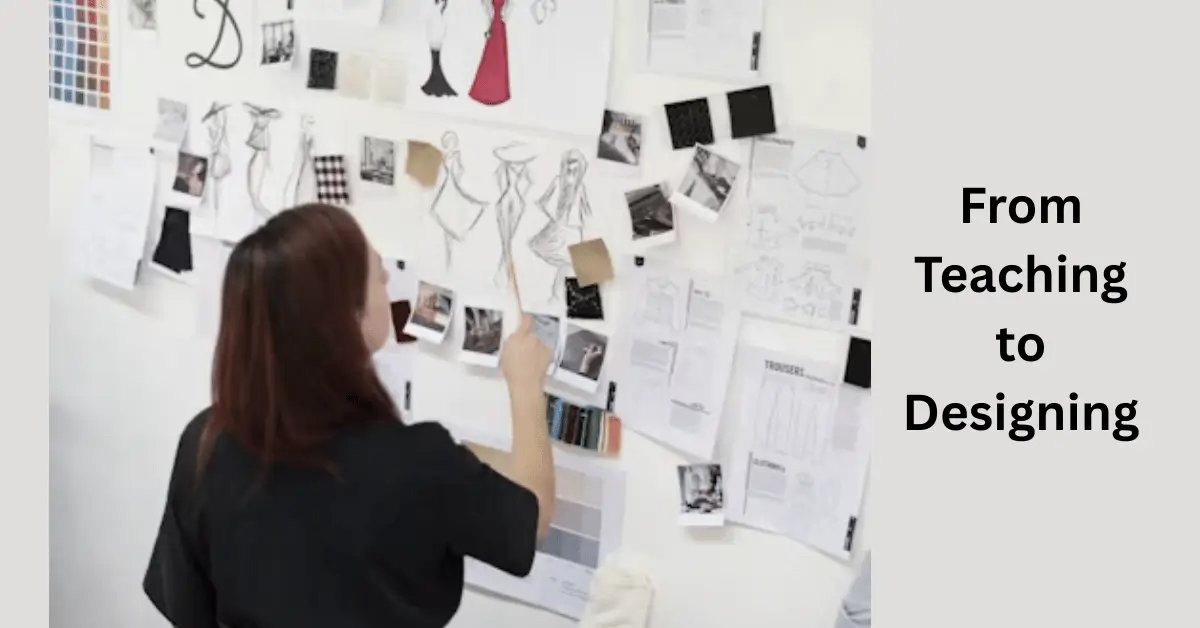
Know how I transitioned from teaching to designing, the skills I carried with me, challenges I faced, and practical steps to build a successful creative career.
Changing careers can feel like starting all over again, especially when you are moving from a familiar profession like teaching into a creative field such as design. But what if your previous experience is not something you need to leave behind?
My journey from teaching to designing taught me that communication, creativity, research, organization, and understanding people can become powerful design skills.
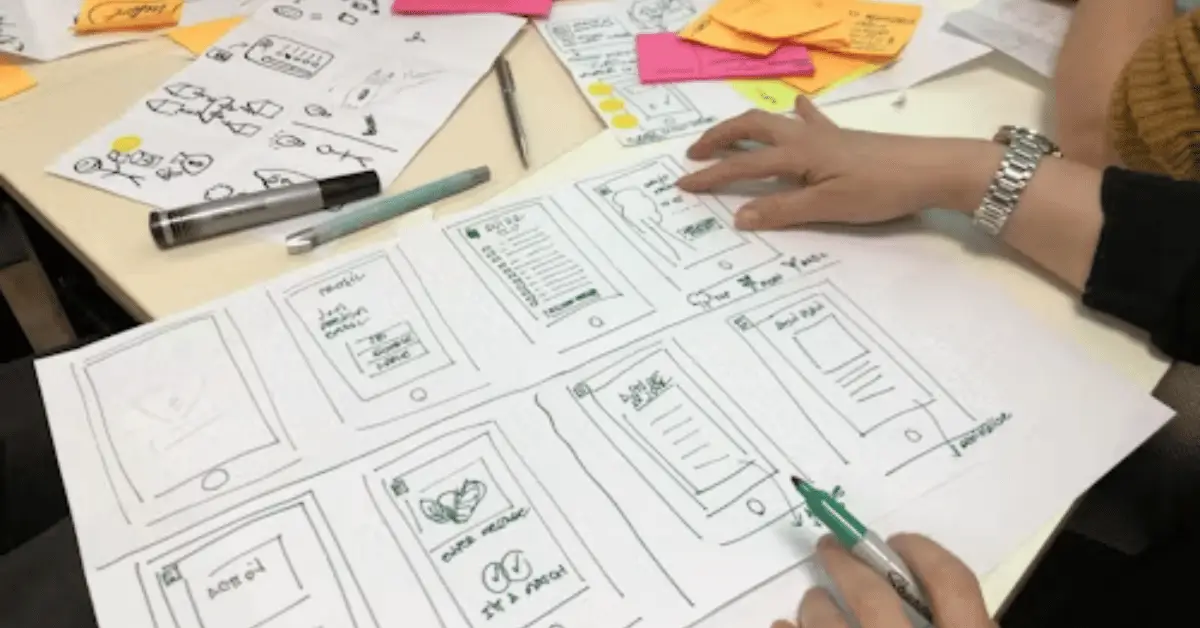
In this guide, I’ll share how I made the transition, what I learned along the way, and practical tips that can help you make a similar career change with greater confidence.
Why I Decided to Move from Teaching to Designing
Changing careers can feel like stepping off a familiar road and onto a path that has no clear signs. Teaching had given me valuable experience, confidence, communication skills, and the ability to work with different kinds of people, but I gradually realized that another part of me wanted more creative freedom.
I enjoyed preparing visual materials, organizing information, creating attractive presentations, working with websites, and thinking about how information could be presented more clearly. At first, I did not see these activities as professional design skills.
I simply thought of them as things I enjoyed doing around my teaching work. Looking back, I realize that the classroom was actually where my interest in design began.
Career-change guidance also points out that people coming from writing, education, marketing, and other communication-heavy professions can bring useful transferable skills into graphic design.
The biggest change happened when I stopped asking myself, “Can I really become a designer?” and started asking, “What do I need to learn to become a better designer?” That small change in thinking made the transition much less frightening.
I did not need to throw away everything I had learned as a teacher and start from zero. Instead, I could build something new on top of what I already knew.
Teaching had trained me to explain difficult ideas, understand an audience, manage deadlines, receive feedback, and adjust my approach when something was not working.
Those abilities turned out to be surprisingly useful in design because good design is not simply about making something beautiful; it is about communicating an idea to another person effectively.
Recognizing My Creative Side
For a long time, I thought creativity belonged mainly to artists, illustrators, photographers, and people who had studied design formally. I eventually discovered that creativity is much broader than that.
Every time I arranged information on a page, selected an image for a presentation, created a worksheet, decided which heading should be larger, or tried to make complicated information easier for students to understand, I was making design decisions.

The tools were different, and the environment was different, but the underlying question was similar: How can I present this information so another person understands it quickly? That question became the bridge between teaching and designing.
My transition therefore did not begin with buying expensive software or announcing a completely new career. It began with paying attention to what I already enjoyed.
I started exploring graphic design, web design, visual content, social media graphics, and digital layouts.
The more I learned, the more I understood that design has its own language: typography, hierarchy, spacing, alignment, contrast, balance, color, composition, and visual consistency. These principles gave structure to the creativity I had already been using intuitively.
The Classroom Was My First Design Studio
When I look back, the classroom was almost like my first design studio. A teacher constantly creates materials for an audience with specific needs, limited attention, and different levels of understanding.
A worksheet needs hierarchy. A presentation needs a logical flow. A classroom poster needs to communicate quickly. Even a lesson plan has a kind of information architecture because ideas must appear in an order that makes sense.
That experience helped me understand something important: design is problem-solving disguised as creativity.
A designer is not simply decorating a page. A designer is deciding what deserves attention, what can be removed, what needs emphasis, and how one element should relate to another.
This perspective later became particularly useful when I moved toward digital design because websites, graphics, and marketing materials all require the designer to think about the person who will actually use or see them.
The Teaching Skills I Took Into Design
One of the biggest mistakes people make when changing careers is focusing entirely on what they do not know. I made a conscious effort to look at the other side of the equation: What do I already know that can help me?
Teachers possess many skills that can transfer into creative and digital careers, particularly communication, organization, research, presentation, problem-solving, empathy, and working with feedback.
Instructional-design career resources similarly identify skills such as needs analysis, design, development, implementation planning, and evaluation as areas where teaching experience can transfer.
Teaching also taught me how to work under pressure. There are deadlines, unexpected problems, different personalities, limited resources, and situations where a carefully prepared plan suddenly needs to change.
Freelance design has many of the same challenges. A client may change the brief, request another version, dislike a color choice, or ask for something that was not originally discussed.
Instead of seeing feedback as failure, I learned to treat it as part of the process. That mindset is valuable because professional design is rarely created perfectly on the first attempt.
Communication and Storytelling
Perhaps the most useful teaching skill I carried into design was communication. A designer needs to understand what a client wants, ask the right questions, explain choices, and communicate an idea visually.
A teacher does something remarkably similar every day. You cannot simply know your subject; you must know how to communicate it to a particular audience.
This became especially important when I started creating content for digital platforms. A graphic might contain beautiful typography and impressive images, but if the viewer does not understand the message, the design has failed its main purpose.
Teaching had trained me to think about the receiver rather than only the information itself. That principle became one of my strongest design habits: design for the person looking at it, not only for the person creating it.
Understanding People and Their Needs
Teaching also made me more aware of different audiences. Not everyone understands information in the same way, and not everyone responds to the same visual approach.
Some people need a simple layout. Others respond to strong visuals. Some want detailed information, while others need a short message and an obvious call to action.
That awareness is useful in graphic design, web design, and especially user-focused digital design. Recent career guidance around UX/UI design emphasizes that effective digital design is not simply about appearance; it is about helping people navigate and use a product without confusion.
What I Had to Learn About Design
My existing skills helped me enter the field, but they were not enough by themselves. I had to accept that enjoying design and being a professional designer are two different things. I needed to understand the principles behind good visual communication instead of relying only on instinct.
I began studying layout, typography, color theory, composition, visual hierarchy, branding, image selection, and basic user experience. I also experimented with different digital tools and gradually became more comfortable creating professional-looking graphics.
This was an important stage because software can teach you how to make something, but design principles teach you why you should make it that way.
Current career guidance for people changing into graphic design similarly highlights areas such as typography, composition, visual communication, and digital design tools.
Learning Design Principles
Typography was one of the areas that changed the way I looked at design. Before learning about typography, I might have thought that choosing a font was mainly a matter of personal taste.
Later, I understood that typeface, size, spacing, weight, line length, and hierarchy can dramatically affect readability and emotion.
The same happened with color. Instead of asking only, “Does this color look nice?”, I learned to ask, “Does this color support the message?”
A children’s learning product, a medical website, a luxury brand, and a fitness campaign should not necessarily communicate through the same visual language. Design became less about decoration and more about intentional decisions.
Becoming Comfortable With Digital Design Tools
Learning software was another important part of the transition. Depending on the direction you choose, you may need tools for image editing, vector graphics, layouts, presentations, websites, or interface design.
The important thing is not to become obsessed with learning every available program. That can become a trap.
Instead, I focused on learning tools that supported the kind of work I wanted to create. I practiced by making actual projects rather than watching endless tutorials. Every new project forced me to solve a different problem, and those problems taught me more than passive learning could.
How I Built My First Design Portfolio
A portfolio became one of the most important pieces of my transition because it allowed me to show what I could do instead of simply telling people that I was learning design.
A certificate can demonstrate that you completed a course, but a portfolio demonstrates how you think, create, solve problems, and present your work.
Career-transition guidance repeatedly emphasizes portfolio development as a practical way to demonstrate readiness for graphic-design work.
I did not wait until I considered myself an expert. Instead, I started creating projects and improving them.
Some were personal projects, some were redesign exercises, and others were inspired by realistic business needs. This approach helped me build confidence because every completed project became evidence that I was progressing.
Turning Everyday Work Into Portfolio Projects
One of my most useful strategies was to stop thinking that a portfolio had to contain only work created for famous clients. It did not.
I could demonstrate my abilities through realistic projects: a social media campaign, a website homepage, a digital product cover, a promotional banner, a blog graphic, an infographic, or a brand identity concept.
The key was to present the work professionally. Instead of simply uploading an image, I learned to explain the problem, audience, design approach, and final result.
That transformed a simple graphic into a case study. It also helped potential clients understand that I was not merely someone who could operate a design tool; I could think through a communication problem.
From Practice to Paid Design Work
The transition from practice to paid work was both exciting and uncomfortable. Creating something for yourself is very different from creating something for another person.
A personal project can be changed whenever you want, but a client project comes with expectations, deadlines, revisions, and sometimes very specific preferences.
I started by being realistic about the type of work I could handle. Instead of trying to compete immediately for large branding projects, I focused on smaller assignments that allowed me to develop practical experience.
These projects taught me about client communication, pricing, revisions, file formats, deadlines, and the importance of clarifying requirements before beginning.
Finding My First Clients
My first clients did not need to be large companies. Small businesses, bloggers, website owners, entrepreneurs, and individuals often need practical design help.
Social media graphics, banners, thumbnails, simple website visuals, presentations, ebooks, flyers, and promotional materials can all become opportunities to build experience.
Freelance marketplaces can also provide an entry point, although competition can be intense. The most useful lesson is not simply to create a profile and wait. You need to show specific examples, describe a clear service, understand your client’s problem, and make your offer easy to understand.
Why Small Projects Were Important
Small projects gave me something more valuable than money at the beginning: proof of ability. Each completed project gave me another example for my portfolio and another opportunity to understand how clients communicate.
They also helped me discover what type of design work I actually enjoyed. Career changes are rarely perfectly planned. Sometimes you start in one direction and discover another path along the way.
Graphic design can eventually connect with web design, content marketing, branding, social media, UX/UI, instructional design, or digital-product creation.
Recent industry guidance notes that graphic and UX/UI design share foundations such as visual hierarchy, typography, composition, and creative problem-solving.
The Challenges I Faced During the Career Transition
No career transition is completely smooth. One of the hardest parts was comparing my beginning in design with other people’s middle or advanced stages.
Online platforms make this particularly easy because you can see thousands of polished portfolios in a few minutes. It is tempting to think, “I will never be that good.”
I had to remind myself that every experienced designer once created a first project. Progress is often invisible when you are learning because you notice your mistakes more than your improvements.
The solution was to compare my current work with my previous work instead of comparing myself with someone who had spent years developing their craft.
Overcoming the Fear of Starting Again
Starting again can feel strange, especially after building competence in another profession. Teaching had given me a professional identity, so moving into design meant becoming a beginner again in some areas.
That can be uncomfortable because beginners make mistakes publicly, ask basic questions, and sometimes doubt whether they belong.
The answer was not to eliminate fear. It was to keep working despite it. I learned one tool, completed one project, improved one portfolio piece, contacted one potential client, and repeated the process.
A career transition becomes much less overwhelming when you stop treating it as one enormous decision and turn it into dozens of manageable actions.
How Teaching Still Helps Me as a Designer
I no longer see teaching and designing as completely separate careers. They are connected by communication.
A teacher communicates knowledge, while a designer communicates ideas visually. Both require understanding an audience, organizing information, choosing what deserves attention, and finding a way to make a message easier to understand.
My teaching experience also influences how I approach content and digital projects. I naturally think about clarity, structure, and the reader’s experience.
When I design something, I often ask questions that sound more like a teacher’s questions: What does the viewer need to understand first? What might confuse them? What can I simplify? What should they do next?
That perspective can become a competitive advantage rather than something I need to hide. A teacher moving into design should not try to erase their previous career. Instead, they should turn it into part of their professional story.
A transition is not necessarily about abandoning your past; sometimes it is about discovering how your past can support your future.
My Step-by-Step Transition Plan
If I had to explain my transition as a practical roadmap, I would keep it simple. First, identify the design area that genuinely interests you.
Graphic design, web design, UX/UI, instructional design, presentation design, social media design, and digital products require overlapping but different skills. Choosing a direction prevents you from spending months learning unrelated tools.
Second, learn the fundamentals before becoming obsessed with software. Third, practice by creating realistic projects. Fourth, build a portfolio that demonstrates different skills. Fifth, begin taking small projects and use each one as an opportunity to improve. Finally, keep learning while you work.
A simple transition plan could look like this:
- Identify your design niche.
- Learn fundamental design principles.
- Choose two or three essential tools.
- Create 5–10 strong portfolio projects.
- Turn selected projects into case studies.
- Offer small, clearly defined services.
- Collect feedback and testimonials.
- Improve your portfolio continuously.
- Increase your rates as your experience grows.
- Explore related areas such as web, UX, or instructional design.
The exact timeline will vary from person to person. Some people can study while working full-time; others may need a longer period.
One recent career-change resource estimates that a focused teacher-to-instructional-design transition can take roughly 9–14 months, but that should be treated as an illustrative estimate rather than a promise.
Lessons I Wish I Had Known Earlier
The first lesson is that you do not have to start from zero. Your previous career contains skills that may be more valuable than you realize. The trick is learning how to translate those skills into the language of your new profession.
The second lesson is that practice is more powerful than endless preparation. You can watch hundreds of tutorials and still feel unprepared.
Creating something forces you to make decisions, encounter mistakes, solve problems, and develop judgment. That is where real progress happens.
The third lesson is that a portfolio should tell a story. Do not fill it with random pieces simply because you need more items. Show the kind of work you want clients or employers to hire you for.
If you want website-design clients, show websites. If you want social-media design projects, show strong campaigns. If you want digital-product work, show digital products.
The fourth lesson is that your previous profession can become your niche. A former teacher may have an advantage when designing educational materials. Someone with a healthcare background may understand health-related communication better.
A marketer may understand promotional design. A writer may become especially strong at combining words and visuals.
Finally, I learned that career transitions require patience. There will be days when progress feels invisible. There will be projects that do not work.
There may be clients who say no. None of those things mean that the transition has failed. They are simply part of becoming competent in something new.
Frequently Asked Questions
Q. Can a teacher become a graphic designer without a design degree?
Yes, it is possible, particularly in freelance and portfolio-driven environments. A strong portfolio can demonstrate practical ability, while design education or certificates can help structure your learning.
The important thing is to develop genuine design skills rather than relying only on your previous professional experience.
Q. What teaching skills are useful in design?
Teachers often bring strong communication, presentation, organization, research, empathy, problem-solving, and feedback-management skills.
These abilities can be particularly valuable in client-facing design work because designers need to understand requirements and communicate ideas clearly.
Q. Should I learn graphic design or UX/UI design?
That depends on what you enjoy. If you like creating logos, posters, social-media graphics, branding, and visual content, graphic design may be a natural starting point.
If you are more interested in websites, apps, user journeys, interfaces, and solving usability problems, UX/UI may be a better direction. The two fields overlap, especially in typography, hierarchy, composition, and visual communication.
Q. How can I build a design portfolio if I have no clients?
Create realistic self-initiated projects. Redesign an imaginary brand, create a social-media campaign, design a website homepage, build an ebook cover, create an infographic, or develop a small visual identity.
Present each project as a case study explaining the audience, problem, decisions, and final design.
Q. Is changing from teaching to designing worth it?
It can be worthwhile if you genuinely enjoy creative problem-solving and are prepared to keep learning. Design is not simply an escape from teaching; it is another professional discipline with its own challenges.
The transition becomes much stronger when you treat design as a skill to master rather than simply a new job title.
Conclusion
My transition from teaching to designing was not a sudden jump from one completely unrelated career to another. It was more like building a bridge between two sides of my experience.
Teaching gave me communication, organization, empathy, research, presentation, and problem-solving skills, while design allowed me to use those abilities in a more visual and creative way.
The biggest breakthrough was realizing that my previous career was not something I had to leave behind; it was something I could carry with me.
If you are a teacher thinking about moving into design, do not wait until you feel completely ready. Start by exploring the type of design that interests you, learn the fundamentals, practice consistently, and build a portfolio around real problems.
Your first projects may not be perfect, and that is completely normal. What matters is that each project makes the next one better.
A career change can feel like starting over, but sometimes it is actually starting from experience. Your classroom may have taught you how to communicate with people; design can teach you how to communicate visually.
Put those two abilities together, and you may discover that the career you are moving toward has been quietly developing inside the career you already had.
Ready to turn your skills into a new creative career? If you need help with graphic design, website design, SEO content, or digital projects, I’d be happy to help bring your ideas to life. Let’s create something professional, useful, and visually engaging together.
Read more about digital marketing.